
Loading countdown timer...
NEW COURSE: Introducing GD&T for Design Design better parts with clear, functional GD&T

Archives

Understanding the Skills Needed for Engineering Work

by Tom Geiss on December 6, 2021.

Today, I’m the President of Engineer Essentials, a company I founded to help engineers, machinists, inspectors, students and others learn the concepts of geometric dimensioning and tolerancing (GD&T). I’m a mechanical engineer and a Certified...
Why use Profile over Coordinate Dimensioning

by Brandon John on August 16, 2021.

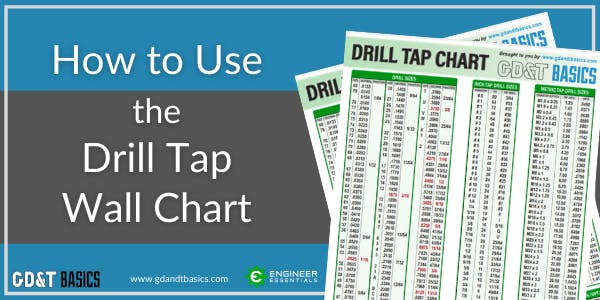
To determine when to use Profile of a Surface or Coordinate Dimensioning, let’s first look at what the 2009 ASME Y14.5 Geometric Dimensioning and Tolerancing Standard tells us.  Paragraph 2.1.1 was revised to emphasize/encourage the...
Circularity – The Tolerance Zone

by Brandon John on June 22, 2021.

There can be a lot of confusion when dealing with circularity – especially when identifying the tolerance zone compared to how Rule #1 of Geometric Dimensioning and Tolerancing controls it.  In this video, we provide...

Virtual Condition – Does it apply at RFS?

by GD&T Basics on May 5, 2021.
In this question line video, Brandon discusses Virtual Condition and whether it can apply at Regardless of Feature Size (RFS). What is Virtual Condition (VC)? When a feature is controlled with the Maximum Material Condition...

Profile of a Line Tolerance Zone

by GD&T Basics on April 6, 2021.

This video is in response to a question that we received on our question line from Amar. Amar’s question is as follows: “If we are given a BASIC radius of 10mm, and on the radius,...

Circularity, Rule #1, and How to Report

by GD&T Basics on February 12, 2021.

This video is in response to a question that we received on our question line from Amber. Amber asked us if the tolerance value for circularity can be obtained by subtracting the upper limit of...

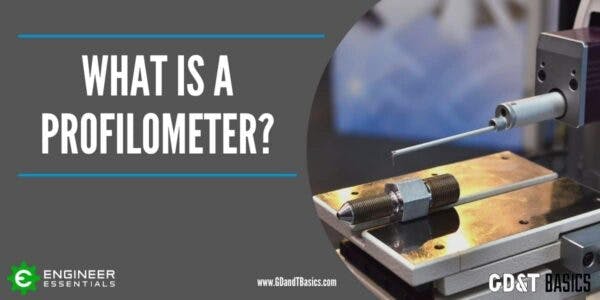
What is a Profilometer?

by GD&T Basics on February 12, 2021.

Ever wonder how surface finish is measured? For inspection, we use a device called a Profilometer.  In this article, we will show you how profilometers work and highlight their advantages and limitations. What is a...

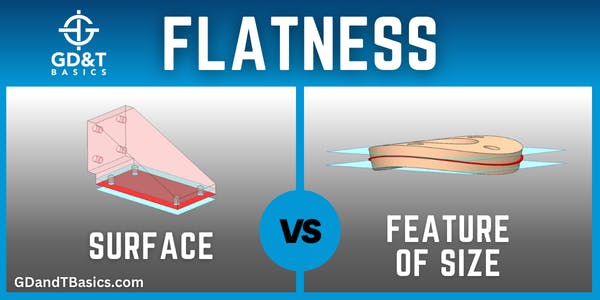
Flatness – Surface vs. Feature of Size

by GD&T Basics on February 12, 2021.

In this video, Brandon discusses the difference between measuring Flatness of a Surface and Flatness of a Feature of Size (FOS). Flatness of a Surface Surface flatness is the type of flatness that most people...

Basic Dimensions and How to Report

by Brandon John on January 27, 2021.

In this video, Brandon discusses basic dimensions and why they should not be recorded on an inspection report. What Are Basic Dimensions? Basic dimensions are used in Geometric Dimensioning and Tolerancing to describe the theoretically...

How Does 1st Angle Projection Work?

by Brandon John on January 19, 2021.

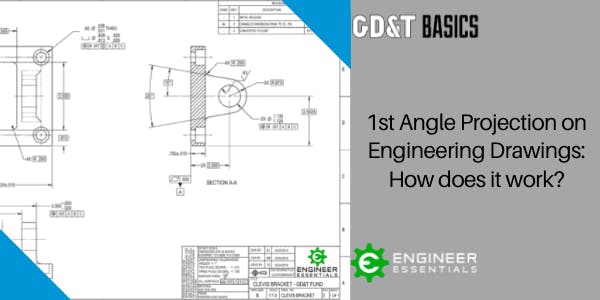
This post is in response to a question that we received on our question line from Gilroy. Gilroy asked us about the drawing projection method in an example problem that was a part of our...

CMM Inspection Basics

by Seth Elder on January 18, 2021.

Do you know how dimensions and tolerances for complex parts are measured?  Often, a coordinate measurement machine or CMM is used.  In this article, we will look at different types of CMM’s and discuss how they work and when they are used.     What is...

Profile Deviation Reporting

by Brandon John on January 13, 2021.

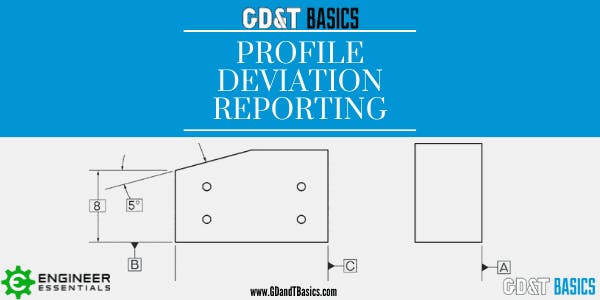
This video is in response to a question that we received on our question line from Brandon.   The question is as follows: “I have profile tolerance on a flat surface of 0.2 mm with respect...

The Basics of Surface Finish

by Seth Elder on January 6, 2021.

Surface finish can be a confusing subject, especially when it comes to units or the difference between Ra and Rz. In this article, we will provide a broad overview and answer some of the most...

ASME GD&T Exam Certification

by Brandon John on December 15, 2020.

Some of the most common questions that we receive at GD&T Basics is regarding the ASME GDTP Certification Exams. (Yes, you can become a certified GD&T expert!) Read on to learn more about the different...

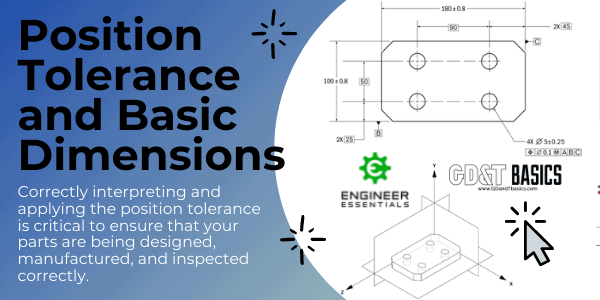
Position Tolerance and Basic Dimensions

by Seth Elder on November 12, 2020.

The video below is in response to a question that we received on our question line from Ash.   The question is as follows: “I regularly see drawings where spacing between a pair of holes is...

Advantages of GD&T vs. Coordinate Tolerancing

by Crystal Bemis on November 6, 2020.

Everyone understands the simple plus or minus tolerances of coordinate dimensioning. So why use GD&T instead? Here are four reasons that GD&T has an advantage over coordinate tolerancing…   What are the advantages of GD&T...

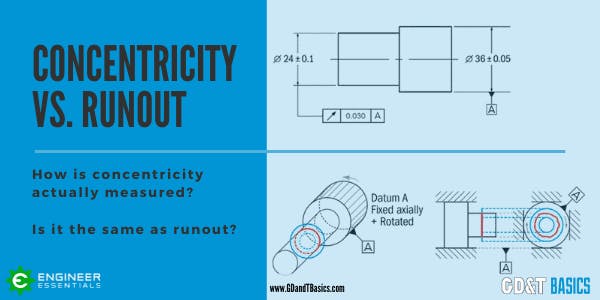
Using Runout to Measure Concentricity

by Seth Elder on October 29, 2020.

The video below is in response to a question that we received on our question line from Jeff.   Jeff asked us if concentricity is always equal to half of the runout value.  ASME Y14.5 defines...