Loading countdown timer...
NEW COURSE: Introducing GD&T for Design Design better parts with clear, functional GD&T

Archives

Meet the GD&T Basics Team: Molly Olson, GD&T Instructor

by Crystal Bemis on April 17, 2023.

Molly Olson is one of our expert GD&T Instructors, with a wealth of valuable real-world experience in quality control and inspection. She has spent nearly 20 years as a Quality Inspector and CMM Programmer and Operator across several different industries, including aerospace, firearms, robotics, and prosthetics.

Chamfer Dimensioning

by Crystal Bemis on November 10, 2022.

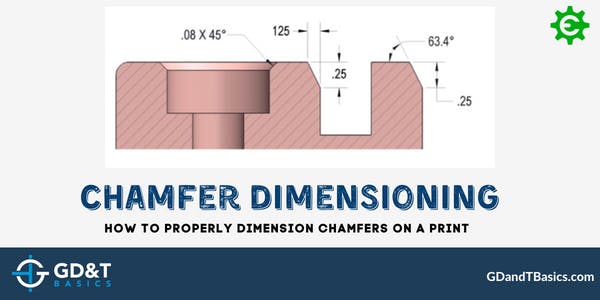
A chamfer is an edge feature commonly seen on part drawings, and consists of an angled cut on an internal or external edge of a part.

Fillets & Rounds

by Crystal Bemis on November 10, 2022.

Fillets and rounds are both radial edge features, with fillets applied to internal edges and rounds applied to external edges.

Break Edges Note

by Crystal Bemis on November 10, 2022.

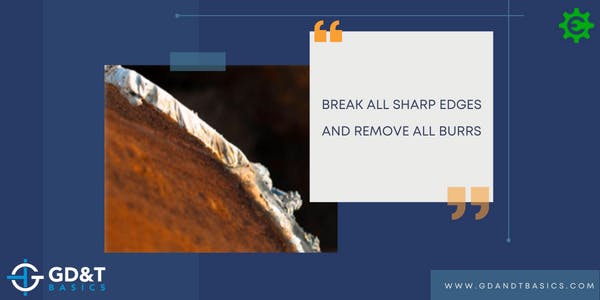
“Break all sharp edges and remove all burrs,” is a common drawing note used to notify the manufacturer that the sharp edges and burrs produced by the manufacturing process must be removed from the part.

Our experience at IMTS 2022

by Emily Haberern on November 4, 2022.

We attended IMTS 2022 as a first time exhibitor! It was an amazing experience - we met lots of people and saw some really cool displays and demonstrations of the machines and technology in our industry.

Knurling

by Crystal Bemis on September 19, 2022.

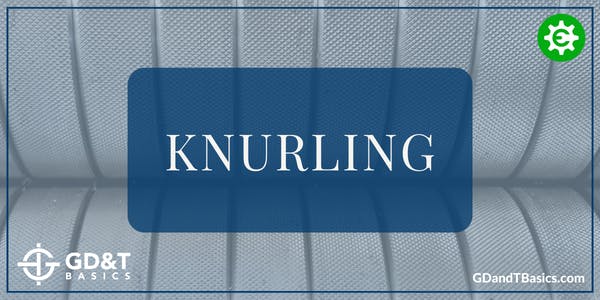
Knurling is a process used to create a pattern on the surface of a material by displacing or deforming the surface.

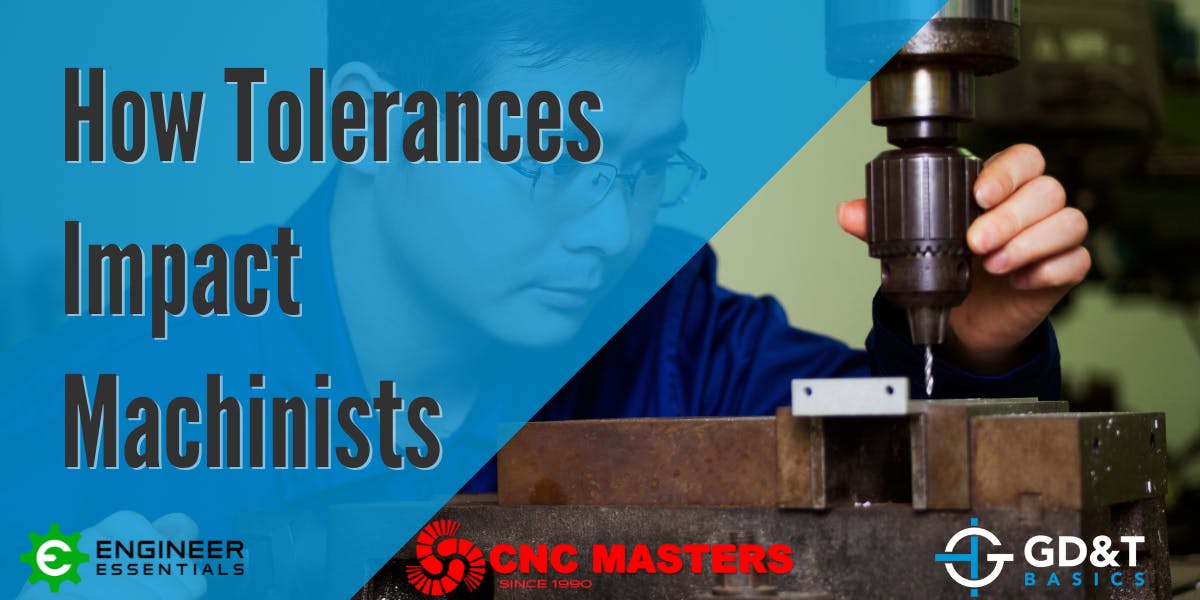
How Tolerances Impact Machinists?

by Peter Jacobs on August 8, 2022.

Precision tops the list of priorities in CNC machining since being off by a few thousandths is enough to cause serious errors. While no machine yields a 100% accuracy rate, specific approaches have been undertaken to manufacture components efficiently and economically.

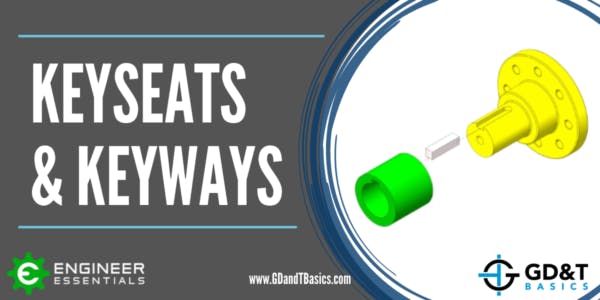
Keyseats and Keyways

by Crystal Bemis on August 1, 2022.

A keyed joint is used to ensure orientation or restrict rotational movement between parts, as in the case of joining a shaft with a coupling. We discuss how a keyed joint is made and inspected in this article.

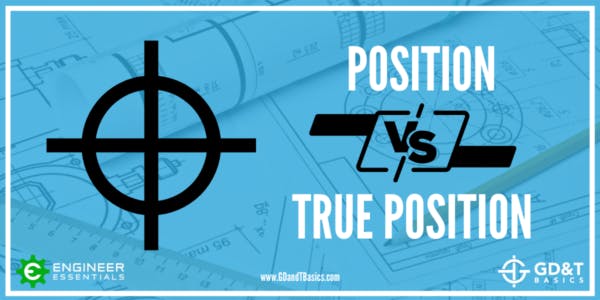
Position Tolerance vs “True Position”

by Crystal Bemis on June 8, 2022.

Though many people refer to the GD&T Position symbol as "True Position," they are not the same thing. Read on to learn the difference between Position and True Position and how they work together to define the position of a feature.