Tolerances for Fillets and Rounds
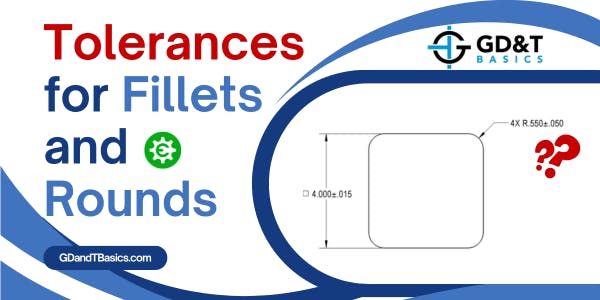
In this Question Line video, Jason discusses applying tolerances to fillets and rounds, explaining why applying profile of a surface allows more direct control of the size and form than using +/- tolerances.
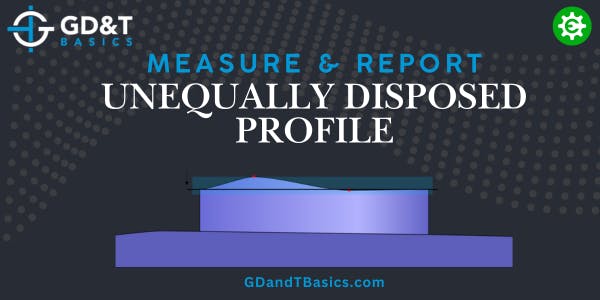
In this Question Line video, Jason explains how to measure and report the total profile deviation for an unequally disposed profile control.
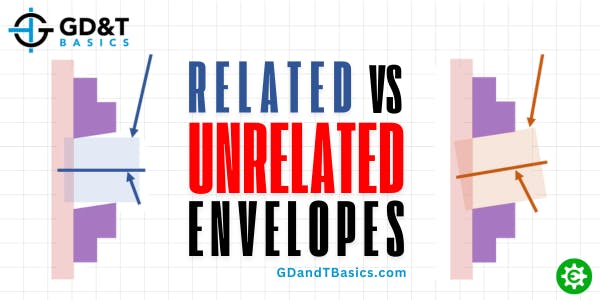
In this Question Line video, Jason explains the difference between the related and unrelated actual mating envelope and walks through an example drawing to explain when and how they are used to inspect a feature.
In this Question Line video, Jason walks through a few examples to show us the difference between profile of a surface with and without datums referenced in the feature control frame and how that affects the reported deviation.
In this Question Line video, Jason discusses a user submitted drawing, explaining options for controlling profile of a pattern of surfaces.
In this Question Line video, Jason discusses the ISO Unequal Zone (UZ) modifier, which is similar to the Unequally Disposed modifier of the ASME standard. He walks through an example where the UZ modifier is included in a feature control frame controlling profile of a surface and discusses how this impacts the tolerance zone.
In this Question Line video, Jason discusses the positional control of the X, Y, and Z translations for a cylindrical post on the submitted drawing. He defines the datum reference frame and zero point of the part and explains why the feature control frame in question is essential to constraining where the cylinder exists vertically.
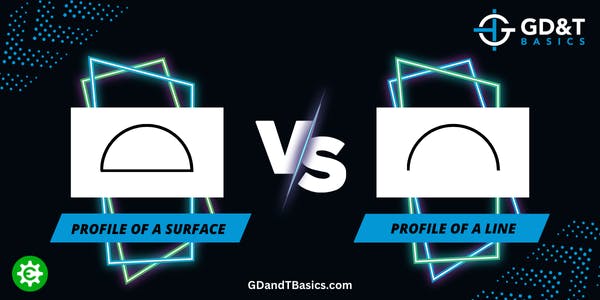
In the Question Line video, Jason walks through two examples to show the design difference between Profile of a Line and Profile of a Surface.
In this Question Line video, Jason discusses a drawing that has a tight tolerance on the location of two holes that relate back to datum features that have much larger form control tolerances.
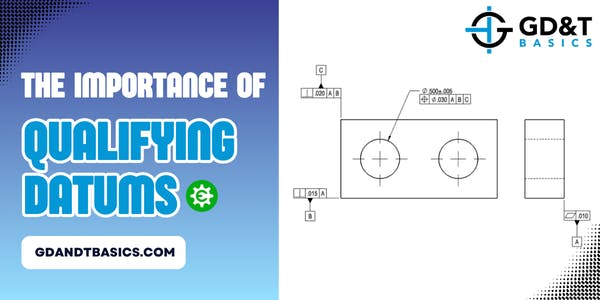
In this Question Line video, Jason explains how datums are qualified and the difference between how CMMs and physical datum simulators set up the datum reference frame for a manufactured part.
In this video, Jason shows how to find the zero, or origin, for a given feature control frame. He walks through an example drawing that utilizes a single datum reference frame, describing how the datum reference frame fully constrains the part, noting that more complex parts may utilize multiple datum reference frames, resulting in multiple origin points.
In this Question Line video, Jason explains the difference between locating features using GD&T and doing so with traditional coordinate dimensions. He walks through two example drawings to show when to use GD&T and the benefits of it over traditional coordinate dimensions.
In this Question Line video, Jason compares coaxiality, concentricity, and position as defined by the ISO 1101 standard. The ASME Y14.5 interpretation of concentricity and coaxiality is very different from ISO and is not presented in this video.
In this Question Line video, Jason explains why the 2018 revision of ASME Y14.5 does not permit locating the distance between stepped surfaces with a size dimension. He also explains how utilizing datums and profile eliminates that ambiguous dimension from being applied and how to report that measurement to get the most direct tolerance between the stepped surfaces.

In this Question Line video, Jason answers questions regarding True Position and how to calculate diametric deviations. He discusses the difference between "True Position" and "Position" and walks through the process of determining whether the part passes inspection.
In this Question Line video, Jason reviews how Rule #1 controls the size and form of a feature of size, and what this means for ring gage design and inspection reporting.
In this Question Line video, Jason discusses how datum targets, datum reference frames, and multiple datum structures can be of assistance in casting drawings.
In this Question Line video, Jason walks through a user-submitted symmetric part drawing. He discusses why the drawing is incorrect and how to fix it, noting that the symmetry symbol was removed from the ASME Y14.5 standard due to common misuse of the symbol.
In this Question Line video, Jason answers a question about reverse inspection of orientation and walks through an example to explain why you should not deviate from the inspection criteria given in the feature control frame.
In this Question Line video, Jason discusses manual vs CMM inspection and the reporting requirements of the ASME Y14.45 standard (Measurement Data Reporting standard).
In this Question Line video, Jason discusses reliable datum features. He explains that unreliable datum features can be avoided by following the functional intent of the part and walks through two drawing examples to explain the thought process behind selecting datum features.

In this Question Line video, Brandon walks through examples for both surface straightness and derived median line straightness, explaining how to correctly apply them and discussing design and inspection considerations.

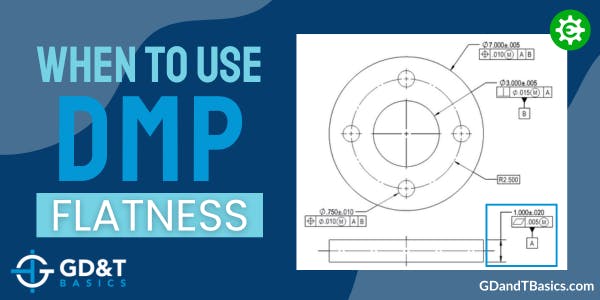
In this Question Line video, Brandon explains the application of derived median plane (DMP) Flatness and discusses its frequent misuse and potential issues when used for stacking parts. He also provides an alternative for controlling flatness for stacking or symmetrical parts.
In this Question Line video, Jason answers questions regarding datum targets and applying flatness and profile of a surface.
In this Question Line video, Jason reviews a drawing example to explain when Maximum Material Condition and Maximum Material Boundary modifiers may be applied.
In this Question Line video, Jason walks through a drawing that includes a position control on a pattern of holes (bolt circle), explaining what the feature control frame is and is not controlling.
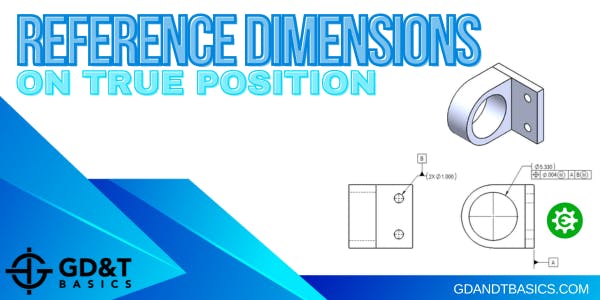
In this Question Line video, Jason walks through an assembly drawing to explain the scenario where a feature being controlled by position must have a reference size dimension rather than a tolerance on the size of the feature.
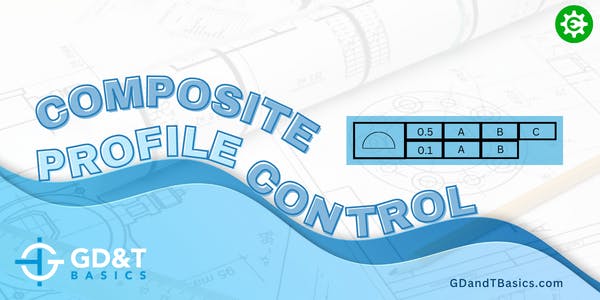
In this Question Line video, Jason discusses a composite feature control frame controlling profile tolerance. He walks through through the user submitted examples to explain the controls of each frame.
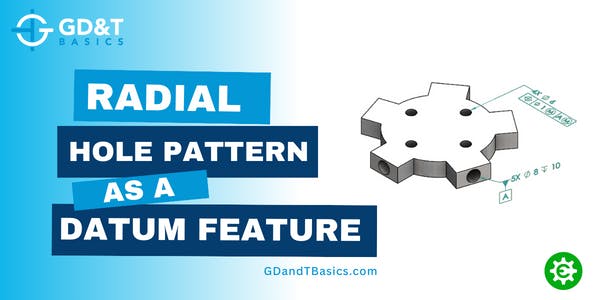
In this Question Line video, Jason responds to a question regarding radial hole patterns as datum features. He discusses how to set up the datum reference frame, how the datum reference frame controls degrees of freedom, and how to apply the Maximum Material Boundary.
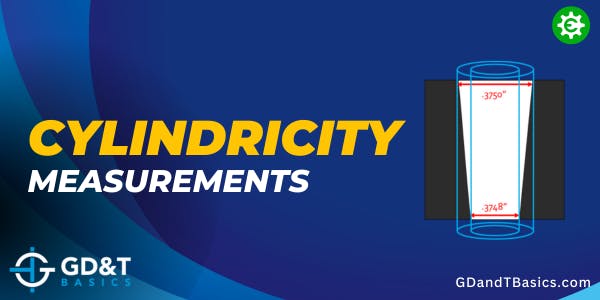
In this Question Line video, Jason reviews cylindricity and discusses how it is measured.
In this Question Line Video, Jason gives a high-level overview of how polar probes and TIR checkers are used to inspect circularity or cylindricity.
In this question line video, Jason explains how to control radial position with a composite tolerance by walking through an example of a pattern of holes on a cylinder.
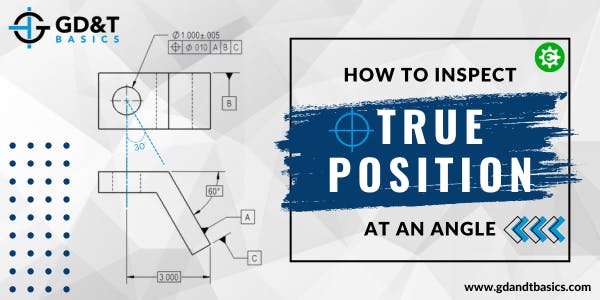
When a hole is being controlled with position, the primary datum is often the surface that the hole originates from and the secondary and tertiary datums are perpendicular or parallel to the primary datum. However, this is not always the case. In this video, Jason walks through an example drawing to show us how to inspect a hole that is at an angle with respect to the primary datum.
The position symbol is one of the most useful symbols in GD&T - but did you realize that you can use it to allow more tolerance in one direction and less in another? In this video, Jason explains how to achieve bidirectional position control through the use of a Multiple Single Segment Feature Control Frame.
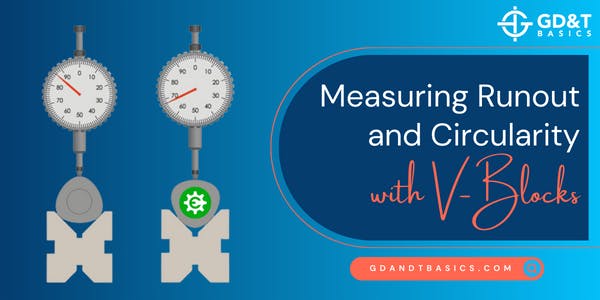
V-Blocks are popular tools used with manual inspections, but come with a unique pitfall that can impact the accuracy of measurements. In this video, Jason walks through the potential issues associated with using V-Blocks and how they can affect measurements of circularity and runout.
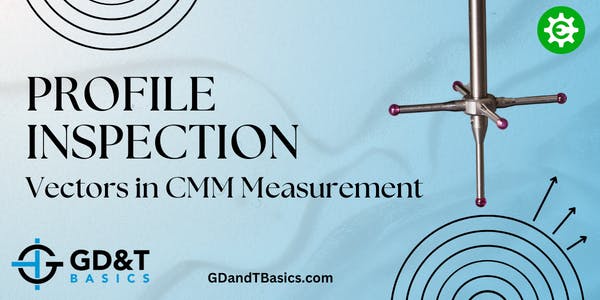
Coordinate Measuring Machines (CMMs) are essential tools for obtaining precise measurements. However, to ensure accurate measurements, it is crucial to understand how to use them correctly. In this video, Jason explains the importance of recognizing and utilizing appropriate vectors when inspecting a profile or irregular surface with a CMM probe.
In this series, we will explore the most common errors that we see in implementing GD&T on engineering prints, and provide you with practical solutions to avoiding these pitfalls.
Geometric Dimensioning and Tolerancing, and the concept of “True Position,” originated due to a rejection of functional parts as a result of coordinate dimensioning. Let’s look at a simple assembly to illustrate why this is true, and how GD&T Position takes care of this problem.
The manufacturing industry is facing a workforce shortage, resulting in a loss of tribal knowledge and a widening skills gap. Discover how manufacturers are addressing this through employee training programs - and how GD&T Basics can help your team gain a comprehensive understanding of how to accurately interpret and analyze engineering prints, ensure compliance with industry drawing standards, and acquire the skills needed for effective inspection practices.
In this Question Line Video, Brandon explains Rule #1 of GD&T (the Envelope Principle) and how Go/No-Go gages are used to verify that Rule #1 is met for a feature of size.