The LMC Modifier
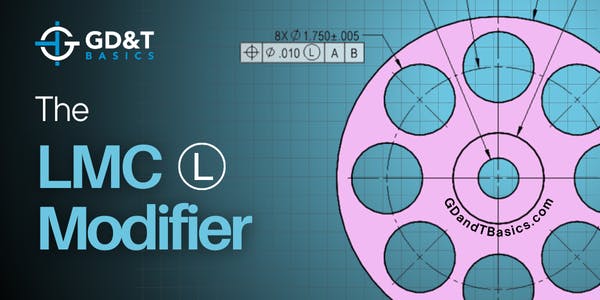
In this Question Line video, Jason explains how the LMC modifier impacts position tolerance, minimum wall thickness, and assembly clearance.
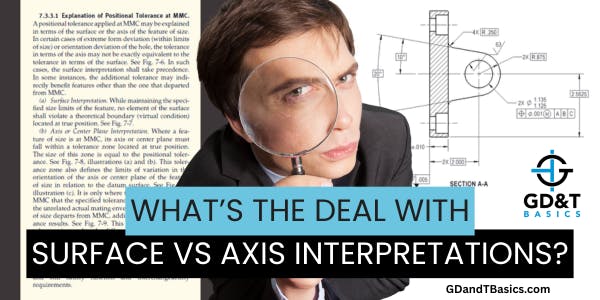
In this Question Line video, Jason explains surface vs. axis interpretation for positional tolerance at MMC and why ASME Y14.5 states to follow the surface interpretation when extreme form error is present.
In this Question Line video, Jason reviews a submitted weldment drawing and demonstrates how to calculate the position tolerance needed for a zero-clearance fit in the worst-case assembly scenario, ensuring that the shaft can pass through two coaxial holes.
“How do I inspect position if my drawing references ISO?” In today’s Question Line Video, Jason looks at a part with a cylindrical hole feature and compares the ASME and ISO standards for controlling the position of that hole.
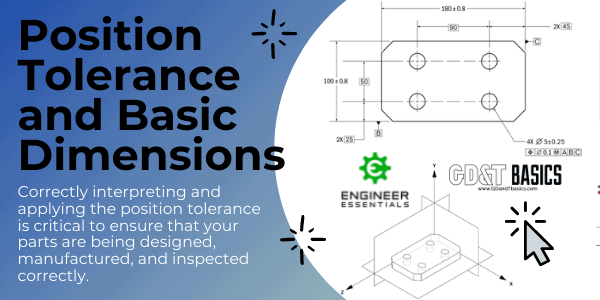
When applying position tolerances to countersunk fixed fastener assembly conditions, our design must not only ensure assembly, but also that the fastener head sits flush or below the surface of the part. We are able to determine the values required to achieve this by using the fixed fastener equation.
Though many people refer to the GD&T Position symbol as "True Position," they are not the same thing. Read on to learn the difference between Position and True Position and how they work together to define the position of a feature.
The video below is in response to a question that we received on our question line from Ash. The question is as follows: “I regularly see drawings where spacing between a pair of holes is...