

In this Question Line video, Jason answers the following question regarding basic dimensions:
Why are the overall dimensions of the square plate (which is 5.0) in rectangles (basic dimension)?
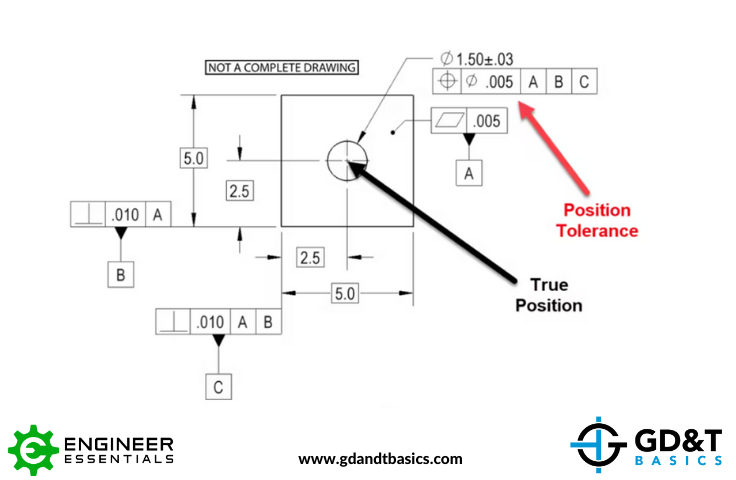
In this video, Jason walks through the submitted drawing and a second example to explain how basic dimensions define target locations, with tolerances applied through GD&T controls. He also covers why we use the “UOS ALL SURFACES” note to apply profile of a surface to any surface not directly controlled in the field of view. Finally, he compares this approach to using plus/minus size dimensions and explains why basic dimensions with profile provide a more functional and accurate way to control surfaces.
Have a GD&T question? Ask our experts using the link below!
https://www.gdandtbasics.com/share-your-gdt-questions/
If your question is selected, we will notify you when our video answer is posted to our YouTube channel.
The one-page GD&T reference that you will use every day
A visual breakdown of every core GD&T symbol and what it controls, all on one page. Bookmark it. Print it. Actually use it.
Download the Chart