
Loading countdown timer...
NEW COURSE: Introducing GD&T for Design Design better parts with clear, functional GD&T

Archives

Profile of a Surface with No Datums

by Crystal Bemis on January 6, 2025.

In this Question Line video, Jason walks through a few examples to show us the difference between profile of a surface with and without datums referenced in the feature control frame and how that affects the reported deviation.

Profile Unequal Zone

by Crystal Bemis on December 9, 2024.

In this Question Line video, Jason discusses the ISO Unequal Zone (UZ) modifier, which is similar to the Unequally Disposed modifier of the ASME standard. He walks through an example where the UZ modifier is included in a feature control frame controlling profile of a surface and discusses how this impacts the tolerance zone.

Positional Control of X, Y, and Z

by Crystal Bemis on December 2, 2024.

In this Question Line video, Jason discusses the positional control of the X, Y, and Z translations for a cylindrical post on the submitted drawing. He defines the datum reference frame and zero point of the part and explains why the feature control frame in question is essential to constraining where the cylinder exists vertically.

Effects of Larger Tolerance Values

by Crystal Bemis on November 11, 2024.

In this Question Line video, Jason discusses a drawing that has a tight tolerance on the location of two holes that relate back to datum features that have much larger form control tolerances.
The Importance of Qualifying Datums

by Crystal Bemis on November 4, 2024.
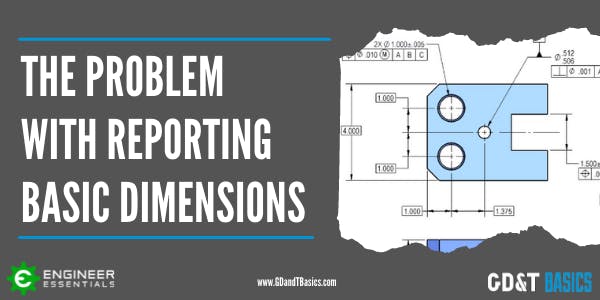
In this Question Line video, Jason explains how datums are qualified and the difference between how CMMs and physical datum simulators set up the datum reference frame for a manufactured part.

How to Find Zero

by Crystal Bemis on October 21, 2024.

In this video, Jason shows how to find the zero, or origin, for a given feature control frame. He walks through an example drawing that utilizes a single datum reference frame, describing how the datum reference frame fully constrains the part, noting that more complex parts may utilize multiple datum reference frames, resulting in multiple origin points.

When to Use GD&T

by Crystal Bemis on October 11, 2024.

In this Question Line video, Jason explains the difference between locating features using GD&T and doing so with traditional coordinate dimensions. He walks through two example drawings to show when to use GD&T and the benefits of it over traditional coordinate dimensions.

Coaxiality vs. Concentricity vs. Position

by Crystal Bemis on October 7, 2024.

In this Question Line video, Jason compares coaxiality, concentricity, and position as defined by the ISO 1101 standard. The ASME Y14.5 interpretation of concentricity and coaxiality is very different from ISO and is not presented in this video.

Size Dimensions to Avoid

by Crystal Bemis on September 30, 2024.

In this Question Line video, Jason explains why the 2018 revision of ASME Y14.5 does not permit locating the distance between stepped surfaces with a size dimension. He also explains how utilizing datums and profile eliminates that ambiguous dimension from being applied and how to report that measurement to get the most direct tolerance between the stepped surfaces.

True Position and Diametric Deviations

by Crystal Bemis on September 23, 2024.

In this Question Line video, Jason answers questions regarding True Position and how to calculate diametric deviations. He discusses the difference between "True Position" and "Position" and walks through the process of determining whether the part passes inspection.

Datums for Castings

by Crystal Bemis on September 9, 2024.

In this Question Line video, Jason discusses how datum targets, datum reference frames, and multiple datum structures can be of assistance in casting drawings.  

Symmetric Parts and GD&T

by Crystal Bemis on August 29, 2024.

In this Question Line video, Jason walks through a user-submitted symmetric part drawing. He discusses why the drawing is incorrect and how to fix it, noting that the symmetry symbol was removed from the ASME Y14.5 standard due to common misuse of the symbol.

Reverse Inspections of Orientation

by Crystal Bemis on August 22, 2024.

In this Question Line video, Jason answers a question about reverse inspection of orientation and walks through an example to explain why you should not deviate from the inspection criteria given in the feature control frame.

Reliable Datum Features

by Crystal Bemis on August 6, 2024.

In this Question Line video, Jason discusses reliable datum features. He explains that unreliable datum features can be avoided by following the functional intent of the part and walks through two drawing examples to explain the thought process behind selecting datum features.