
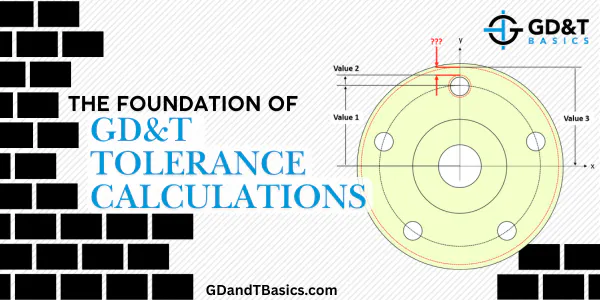

GD&T tolerance calculations have a reputation for being complicated, but when you understand the fundamentals, they become much more straightforward. In fact, one of the biggest advantages of GD&T is that it replaces much of the ambiguity found in traditional ± tolerancing with clearly defined boundaries, making tolerance calculations easier to understand and apply.
In this Question Line video, Jason introduces the foundations of GD&T tolerance calculations and explains how concepts like Maximum Material Boundary (MMB) and Least Material Boundary (LMB) serve as the building blocks for evaluating part functionality. Understanding these boundaries is essential for performing GD&T tolerance calculations related to clearances, wall thickness, and tolerance stack-ups.
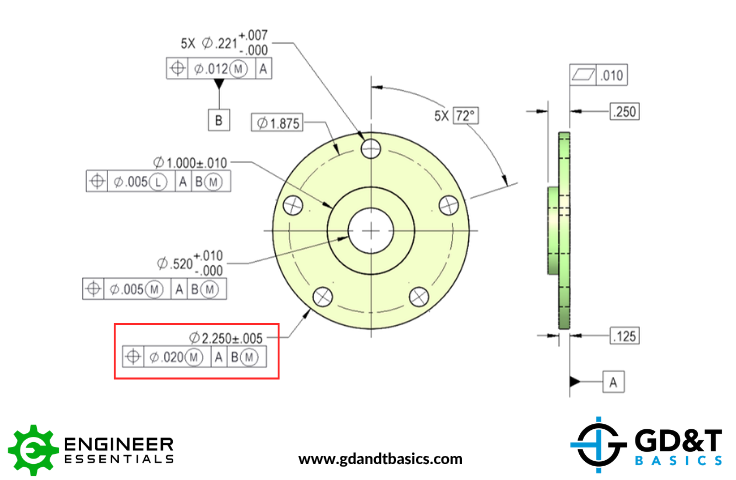
To demonstrate how this works, Jason walks through an example that shows how to calculate the LMB and MMB for the outer diameter of the part shown above. He then demonstrates how those boundaries can be used in vector tolerance analysis to find a resulting stack up between features and calculate the worst-case minimum wall thickness.
Whether you’re new to GD&T tolerance calculations or looking to strengthen your understanding of the fundamentals, this video provides a helpful introduction to the concepts behind tolerance analysis. If you’d like to dive deeper into these concepts, our GD&T Design Course covers tolerance stack-up analysis in much greater detail.
Have a GD&T question for our experts? Submit it using the link below!
https://www.gdandtbasics.com/share-your-gdt-questions/
If your question is selected, we will notify you when our video answer is posted to our YouTube channel.
* If you are a current student, reach out to us directly and we will get you into contact with your instructor. Active students’ questions receive a direct response within 24-48 hours.
The one-page GD&T reference that you will use every day
A visual breakdown of every core GD&T symbol and what it controls, all on one page. Bookmark it. Print it. Actually use it.
Download the Chart