We're exhibiting at IMTS 2026 — Booth #134034, Sept 14–19. Come see us in Chicago.

GD&T Fundamentals

A practical introduction to GD&T that simplifies concepts into a clear, usable framework.

GD&T Fundamentals teaches a simple framework that allows students to not only understand how Geometric Dimensioning and Tolerancing is used, but also why GD&T improves the manufacturing process. The course is focused on practical knowledge and uses real-world examples as instructional tools. GD&T Fundamentals doesn’t overwhelm students with every GD&T concept – the lessons are curated to teach students only the concepts and terminology necessary to do their jobs better and improve your manufacturing operation.


Flexible Learning Options

Learn however is most convenient for you

Online Course

Self-paced learning with quizzes and on-demand videos – great for individuals or teams

Public Training

Live instructor-led public learning – in-person or virtually through live video conferencing

Custom Live Training

Customized training for your company – on-site at your facility or virtually through live video

Our GD&T Course Lineup

Whether you’re starting with the basics or diving deeper, choose the mix of courses that fits your goals.

GD&T training course options and the topics each course covers

Advanced GD&T, GD&T Inspection, and GD&T Design: Participants should have a basic understanding of print reading and must have completed GD&T Fundamentals (or equivalent) as a prerequisite.
It is also highly recommended to take Advanced GD&T prior to GD&T Design, but it is not required.

Take the Quiz!

Are you a GD&T novice, master, or somewhere in between?

Test your GD&T knowledge with this quiz!
Course Objectives

By the end of this course, participants will be able to:
  • Gain a mental framework and understanding that simplifies 95% of all GD&T
  • Understand the main requirements and terminology of the ASME Y14.5 Standard in terms of plain English
  • Learn all 14 major GD&T symbols and understand how to apply the symbols that are useful and to avoid the ones that aren’t  
  • Understand GD&T Feature Control Frames and how they affect manufacturing and inspection
  • Know how Max Material Condition creates bonus tolerance while maintaining a functional part
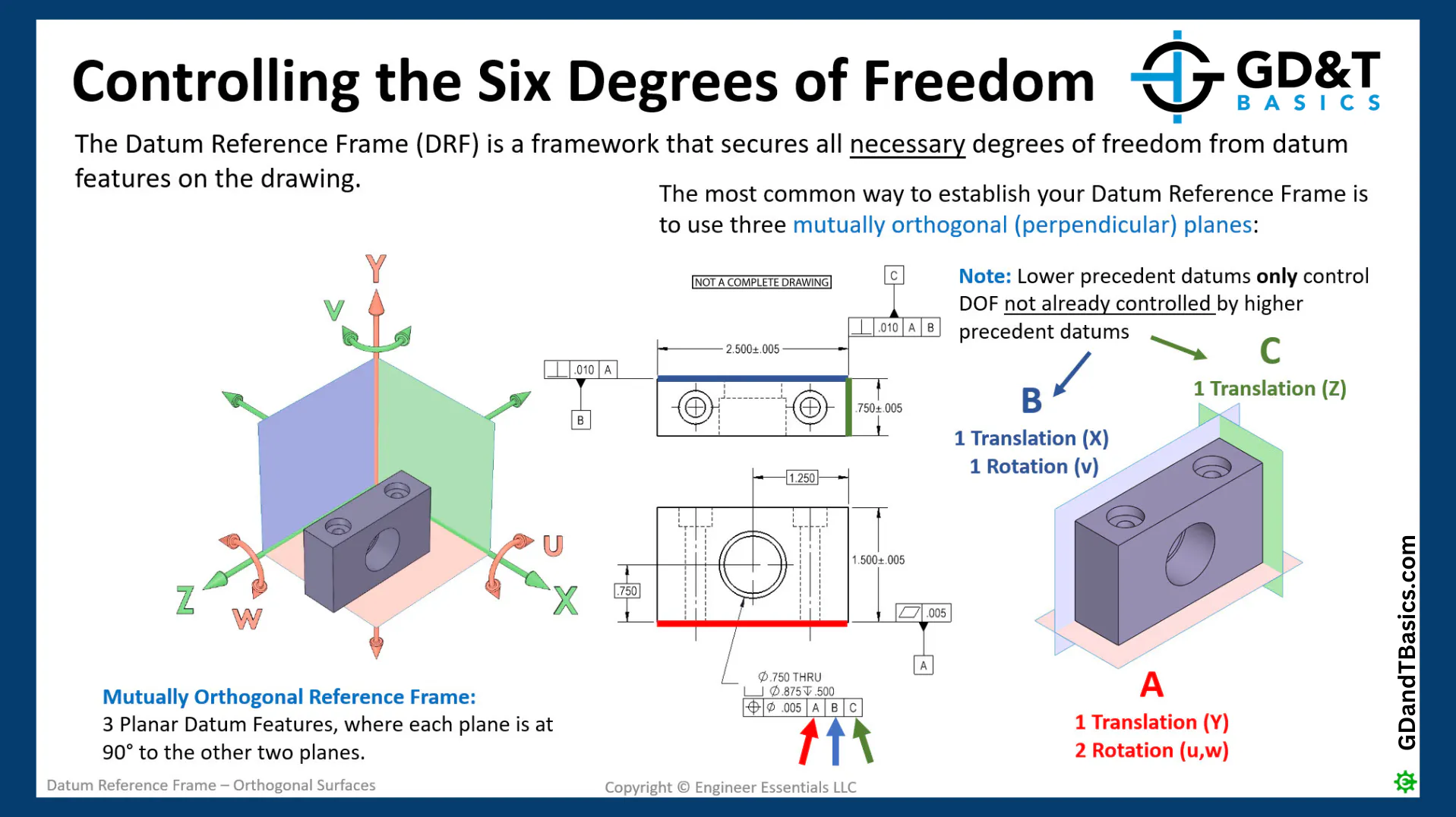
  • Understand datums and how they are applied on drawings for design, manufacturing, and inspection
  • Understand how Geometric Dimensioning and Tolerancing is applied on physical parts and real-world drawings
  • Know best practices and have a realistic approach for using GD&T in your job

Who it is for

The GD&T Fundamentals course takes our print reading course to the next step – by showing how Geometric Dimensioning and Tolerancing is used, interpreted, and applied across a part’s life cycle. This course is designed to be very approachable and geared towards everyone from entry-level to those with intermediate experience.

Our GD&T Fundamentals course is ideal for:
  • Engineers
  • Inspectors and Inspection Planners
  • New Hires
  • Sales and Purchasing Professionals
  • Drafters/Designers
  • Machinists and Operators
  • Tooling Engineers
  • Managers and Supervisors
  • Production Associates
  • And anyone else who works with prints with GD&T

Pre-Requisites

Participants should have some experience in a design, production, or inspection environment working with engineering drawings, and have a basic understanding of print reading. However, no prior GD&T knowledge is required!

Explore the GD&T Fundamentals Course Content

Our GD&T Fundamentals course teaches a simplified framework that helps you understand and apply the tolerances on your prints.

Section 1: Course Introduction

  • What are the GD&T Standards
  • Why Use GD&T

Section 2: GD&T Foundations

  • Feature Control Frame
  • Feature of Size Conditions
  • Size Tolerance and Rule #1

Section 3: Datums

  • Datums Introduction
  • Primary Datum Controls
  • DRF - Orthogonal Surfaces
  • DRF - FOS Datums
  • Datum Targets & Partial Datums

Section 4: Position

  • GD&T Framework
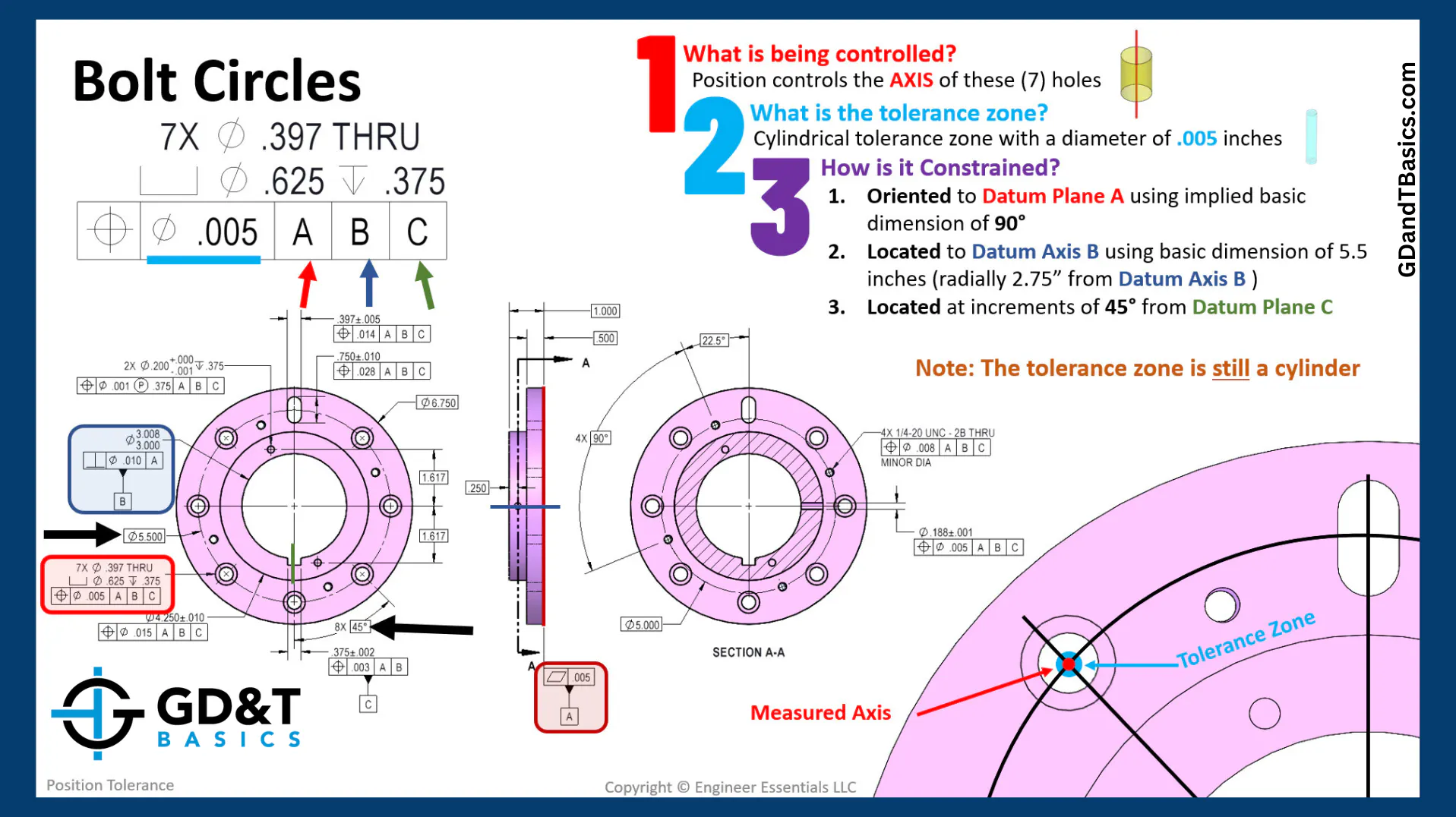
  • Position Tolerance
  • Position Vs Coordinate
    Dimensions

Section 5: Modifiers

  • Regardless of Feature Size (RFS)
  • Maximum Material Condition (MMC)
  • Least Material Condition (LMC)

Section 6: Profile Controls

  • Surface Profile
  • Profile of a Line

Section 7: Orientation Controls

  • Perpendicularity
  • Parallelism
  • Angularity

Section 8: Form Controls

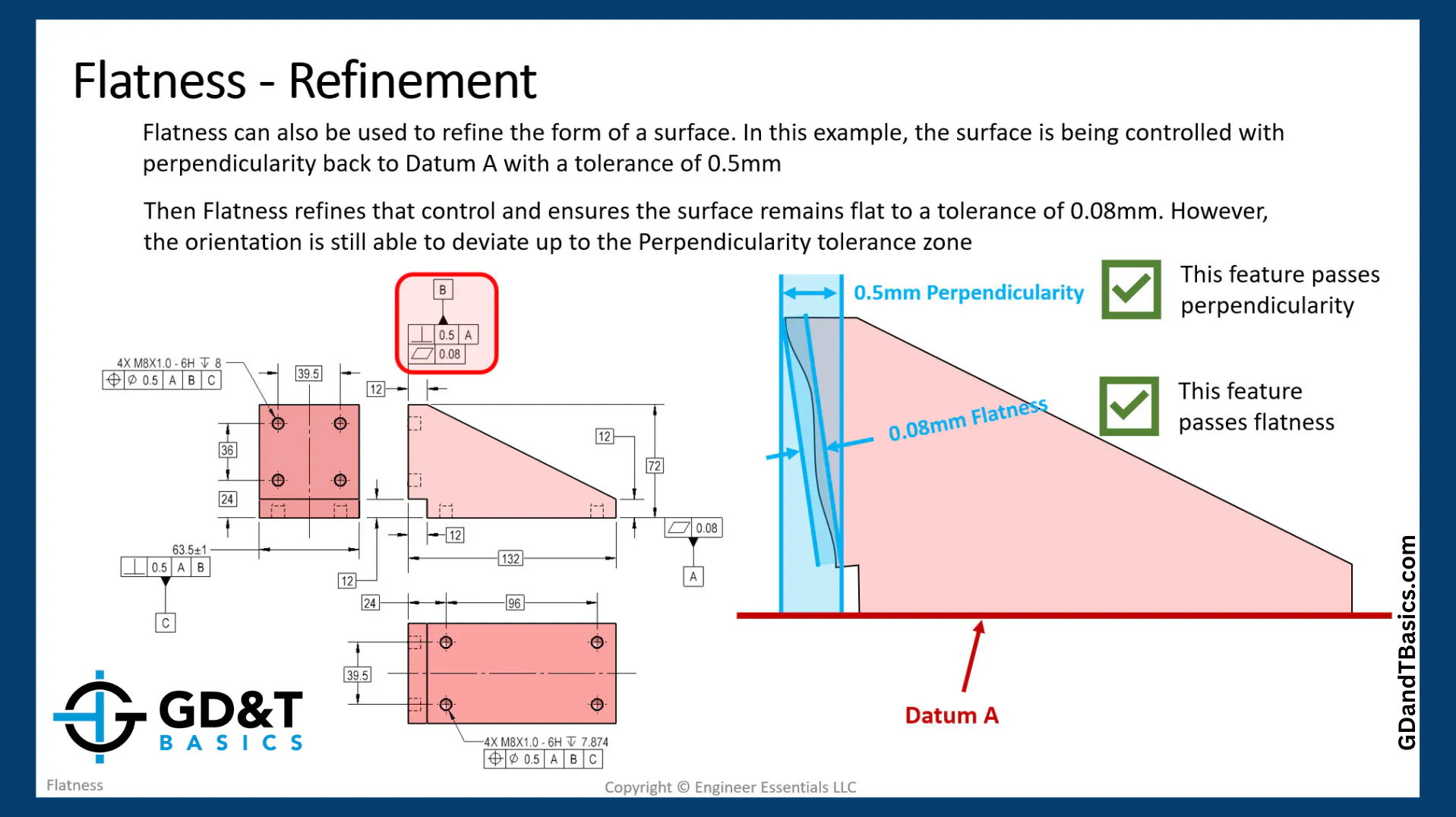
  • Flatness (Surface & DMP)
  • Straightness (Surface & DML)
  • Circularity
  • Cylindricity

Section 9: Runout Controls

  • Circular Runout
  • Total Runout

Section 10: Concentricity and Symmetry
  • Concentricity
  • Symmetry

Watch a Sample Lesson from the Online Course

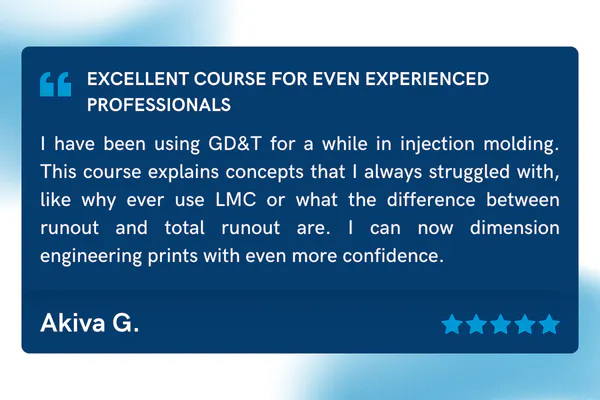
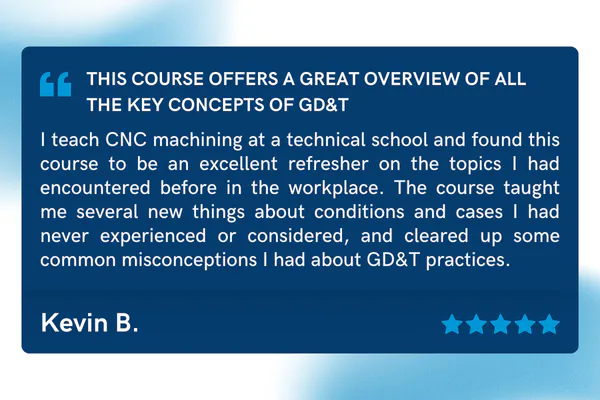
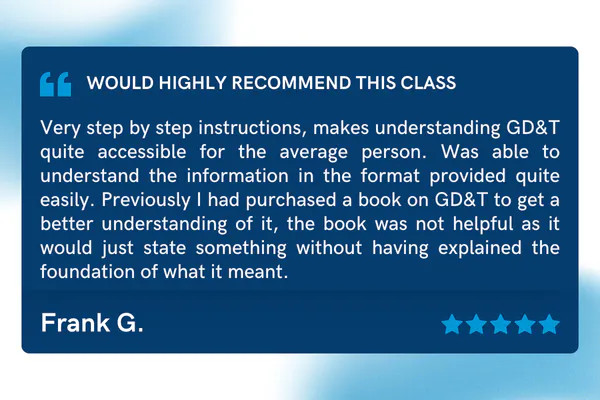
Feedback from Our GD&T Fundamentals Trainings

GD&T Fundamentals Course - FAQs

  • How is this course different from other GD&T training?


    Most GD&T courses feel overly technical or hard to apply. This one’s different.

    We focus on a practical framework that covers 95% of what you’ll actually use in industry, explained in plain English. You’ll learn not just what the symbols mean, but when to use them, why they matter, and how to apply them confidently in your job — not just pass a test.

  • Do I need prior GD&T knowledge?

    No GD&T experience needed — but you should be comfortable reading basic engineering drawings. If not, we recommend starting with our Print Reading & Tolerances course first.

  • What will I learn in this course?


    This course teaches a simple, practical GD&T framework that covers 95% of what you’ll actually use on the job. It's designed to eliminate confusion, boost clarity, and help you solve real manufacturing problems.

    You’ll learn how to:

    • Understand why GD&T matters — and how it prevents miscommunication between teams
    • Apply all 14 major GD&T symbols and know when not to use them
    • Use feature control frames to clarify design intent and inspection criteria
    • Apply datums throughout a part’s lifecycle: from design to inspection
    • Interpret GD&T on real drawings and physical parts without overcomplicating things

    If you’ve ever had a part rejected, misquoted, or misunderstood due to unclear tolerancing — this course will help you prevent that from happening again.


  • Who is this course for?

    This course is designed for anyone who needs to read and apply GD&T in real-world settings. Whether you're just getting started or have been exposed to GD&T already — this course brings clarity.

    You’ll benefit if you’re a:

    • Mechanical or design engineer
    • Inspector or inspection planner
    • Machinist or CNC operator
    • Tooling or quality engineer
    • Buyer, manager, or salesperson who needs to interpret GD&T correctly

    If you’ve ever second-guessed a feature control frame or struggled with inconsistent or confusing prints, this course will eliminate that uncertainty.

  • Do I need any prerequisites?

    You should have a basic understanding of how to read engineering drawings. If you're not confident in that yet, we recommend starting with our Print Reading & Tolerances course first.

    No prior GD&T knowledge is required.

  • Can this course help me pass a certification or meet job qualifications?

    This course is not an official prep course for the ASME GDTP Certification exam, but it can absolutely help you build the skills and knowledge that employers — and the exam — expect.

    Here’s what you can expect from GD&T Fundamentals:

    • A certificate of completion you can use for training records or resumes
    • Practical GD&T knowledge directly applicable to job roles in design, inspection, quality, and manufacturing
    • Confidence interpreting real drawings — a skill many job descriptions list but few people actually master

    For those aiming to take the ASME GDTP Technologist- or Senior-Level Exams, we recommend our Expert Bundle, which combines three courses:

    • Print Reading & Tolerances (covers general tolerancing, symbology, and drawing standards beyond GD&T)
    • GD&T Fundamentals (your core framework for interpreting and applying GD&T)
    • Advanced GD&T (covers advanced concepts such as Resultant Condition, Composite Controls, and Advanced Datum Features)

    These courses together cover much of the material you’ll see on the exam and give you access to instructors for questions along the way.

    It’s important to note:

    • Both GDTP exams are based on the ASME Y14.5 Dimensioning and Tolerancing Standard, not just GD&T
    • Up to 25% or more of the exam covers the scope of the standard, general tolerancing, and non-GD&T symbology — which is why Print Reading & Tolerances is so helpful

    Finally, no matter which course you take, the best way to prepare is to use the ASME Y14.5 Standard itself alongside your training. Reading the standard cover to cover will go a long way in helping you pass.

    We’ve also published free resources to guide your preparation:

    If you have questions about which course or path is right for you, feel free to reach out — we’re here to help you prepare.

  • What standard is this course based on? Will it still apply to my work?

    The course is designed to be “standard agnostic,” meaning we focus on the core principles of GD&T that apply no matter which standard you follow.

    That said, our training is primarily based on the ASME Y14.5 standard, since that’s the most widely used in North America. Wherever appropriate, we also point out key differences between ASME and ISO standards — so that you understand where things diverge.

    This approach ensures that:

    • You’ll get a clear and practical understanding of GD&T, no matter what industry you work in
    • The training is not narrowly confined to one version or standard
    • You’ll be able to apply what you learn in both ASME and ISO environments
    • Whether your organization follows ASME, ISO, or a mix of both, the core concepts taught in this course will still apply to your daily work.
  • Will I get hands-on practice or is this mostly theory?

    This course includes real-world exercises and examples, so you can apply what you're learning immediately.

    You’ll:

    • Work through drawing-based exercises that reinforce each concept
    • See how GD&T shows up on real parts and prints

    While it’s not “hands-on” in the sense of using tools, it’s far from theoretical — it’s focused on real application, not textbook memorization.

  • How does this help me in my current job?

    If you've ever dealt with:

    • Parts rejected because of unclear, too tight tolerancing
    • Misunderstandings between design, production, and inspection teams
    • Uncertainty about how to interpret a feature control frame

    ...this course is for you.

    By learning GD&T through this simplified framework, you’ll:

    • Communicate clearly across design, inspection, and manufacturing
    • Avoid costly rework, scrap, or missed deadlines
    • Know exactly which tolerances matter — and which don’t
    • Make better decisions, faster — and with more confidence
  • What support is available after the course?

    We’re here to help you apply what you’ve learned — not just finish the course.

    • If you enroll in the online course, you’ll have full access to the learning platform for 1 year after enrollment. Even after you complete the training, you can revisit the lessons anytime for review or as a reference on the job.
    • If you complete the course with a live instructor, you’ll receive 90 days of platform access after the training wraps up — including everything available in the online version.

    Included with both formats:

    • Access to previously recorded webinars and bonus video content
    • Extra practice examples and tips
    • Direct email support from certified GD&T instructors for real-world questions

    Whether you're reviewing a concept for a project or facing a tricky drawing at work, we’re here to help long after the course ends.

Still not sure which GD&T training option is best for your team?

Download our free guide to choosing the right GD&T team training to compare your options.